Newroz, also written Nowruz, Nawroz or Nevruz in different languages and contexts, marks the arrival of spring and the New Year for many communities across West, Central and South Asia. For many Kurds, Newroz is also a powerful expression of cultural identity, community, renewal and collective memory. Its meanings overlap with wider regional traditions, while Kurdish celebrations have their own histories and interpretations.

1. A spring festival across regions
Newroz is part of a broad family of New Year and spring celebrations known by names such as Nowruz, Novruz, Nooruz and Nevruz. UNESCO describes Novruz as marking the New Year and the beginning of spring, traditionally celebrated around 21 March across a wide geographical area. Customs differ between countries and communities, and there is no single version of the festival that describes everyone who celebrates it.
For a broad overview of the festival’s regional reach, see UNESCO’s multimedia archive entry on Novruz/Nowruz. For the longer historical context of Nowruz in Iranian cultural and political life, see the Encyclopaedia Iranica article on Nowruz in the Islamic period.
2. What does Newroz mean to many Kurds?
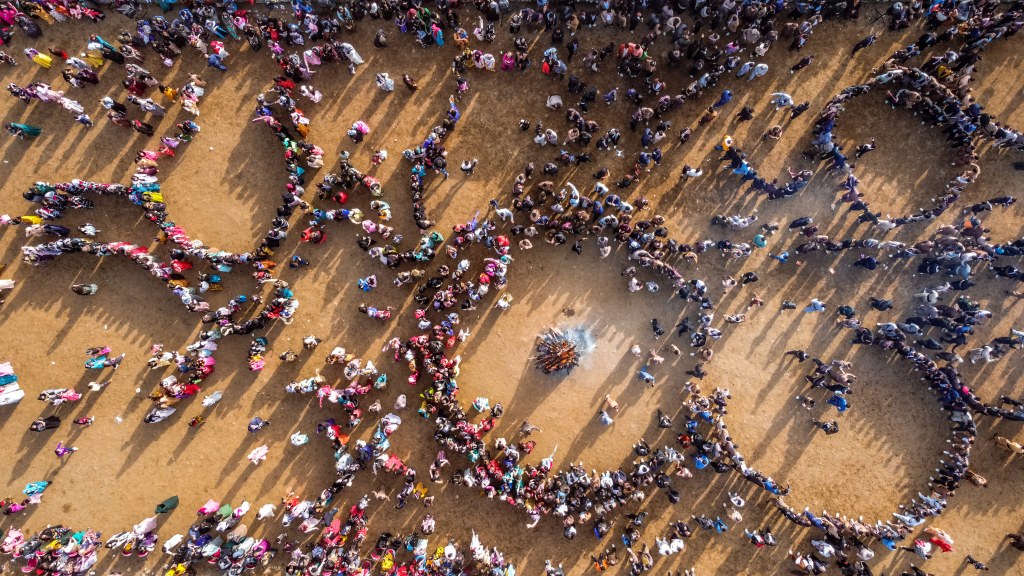
For many Kurdish families and communities, Newroz is a time to gather, wear colorful clothing, share food, dance, listen to music and welcome spring. Bonfires and communal dancing are prominent in many Kurdish celebrations, although practices vary by region and family. The festival can also carry meanings connected to language, cultural visibility, solidarity and political history.
These meanings are not identical for every Kurdish person. Some celebrate mainly as a family or seasonal holiday; others emphasize cultural or political significance. A careful account makes room for this diversity rather than assuming one uniform experience.
3. The story of Kawa the blacksmith
One of the best-known Kurdish interpretations of Newroz connects the day with the legend of Kawa the blacksmith and the tyrant Zahhak (also spelled Dehak or Zuhak). In a widely told version, Kawa leads a revolt against Zahhak, whose rule brings suffering, and signals the tyrant’s defeat by lighting a fire. The fire becomes a symbol of liberation and the return of hope.
This story has great cultural and political significance in Kurdish contexts. However, the legend should be distinguished from independently documented historical events. Newroz is also celebrated by many non-Kurdish communities, and its broader history includes traditions and narratives that are not limited to the Kawa story. Scholars have examined how the legend became central to modern Kurdish interpretations and public celebrations.
For a scholarly discussion of Newroz, heritage and Kurdish identity in Turkey, see “Whose Tradition, Whose Identity? The politics of constructing ‘Nevruz’ as intangible heritage in Turkey”.
4. Fire, dance, music and community
In many Kurdish celebrations, people gather around bonfires, dance the govend (a group or line dance, with local names and forms), play music and spend time with family and friends. Traditional clothing, songs, flags and public gatherings may also be part of the event. What happens in a village, a city square or a diaspora community can differ significantly, and local organizers often shape the program.
Fire can be understood as a seasonal symbol, a marker of celebration and, in some Kurdish narratives, a sign of resistance and liberation. The meaning attached to a practice may change with political circumstances, public policy and the experiences of the people celebrating.
5. Newroz and modern history
In the modern period, Newroz has sometimes been a site of tension between Kurdish cultural expression and state policies, particularly where Kurdish identity or public celebration has been restricted or politicized. In other settings, it is officially recognized as a cultural or public holiday. The legal and political circumstances are different across Turkey, Iraq, Iran, Syria and diaspora countries, and they have changed over time.
It is therefore misleading to describe Newroz only as a political event or only as a seasonal festival. For many people, cultural, family, historical and political meanings coexist. Historical research can help explain these layers without treating every interpretation as universal.
6. A video to explore
The following is an independently produced documentary that discusses Newroz through mythology, celebration and political struggle. It is linked here as an external viewing recommendation; Kurdistan Voice does not claim ownership of the video.
Watch on YouTube: “Newroz – The Documentary (Mythology, Celebration and Struggle)” by Everything About Kurdistan.
As with any documentary, use its description and cited sources as a starting point and compare historical claims with academic work and primary sources. Linking to a publicly available YouTube video is different from downloading, re-uploading or copying the video; the latter requires appropriate rights or permission.
7. How to celebrate respectfully
- Learn the local customs and pronunciation used by the community hosting the celebration.
- Ask permission before photographing people, especially children or private gatherings.
- Credit musicians, performers and photographers when sharing their work.
- Recognize that Newroz is celebrated by different peoples, with both shared and community-specific traditions.
- When discussing history, distinguish legend, cultural memory and documented evidence without dismissing the meaning of oral tradition.
Conclusion
Newroz brings together spring, renewal, community and cultural memory. For many Kurds, the celebration also expresses identity and the story of Kawa, while remaining part of a much wider regional New Year tradition. Understanding these different layers helps us appreciate both the shared heritage of Newroz and the distinctive ways Kurdish communities make it meaningful.


Leave a Reply