
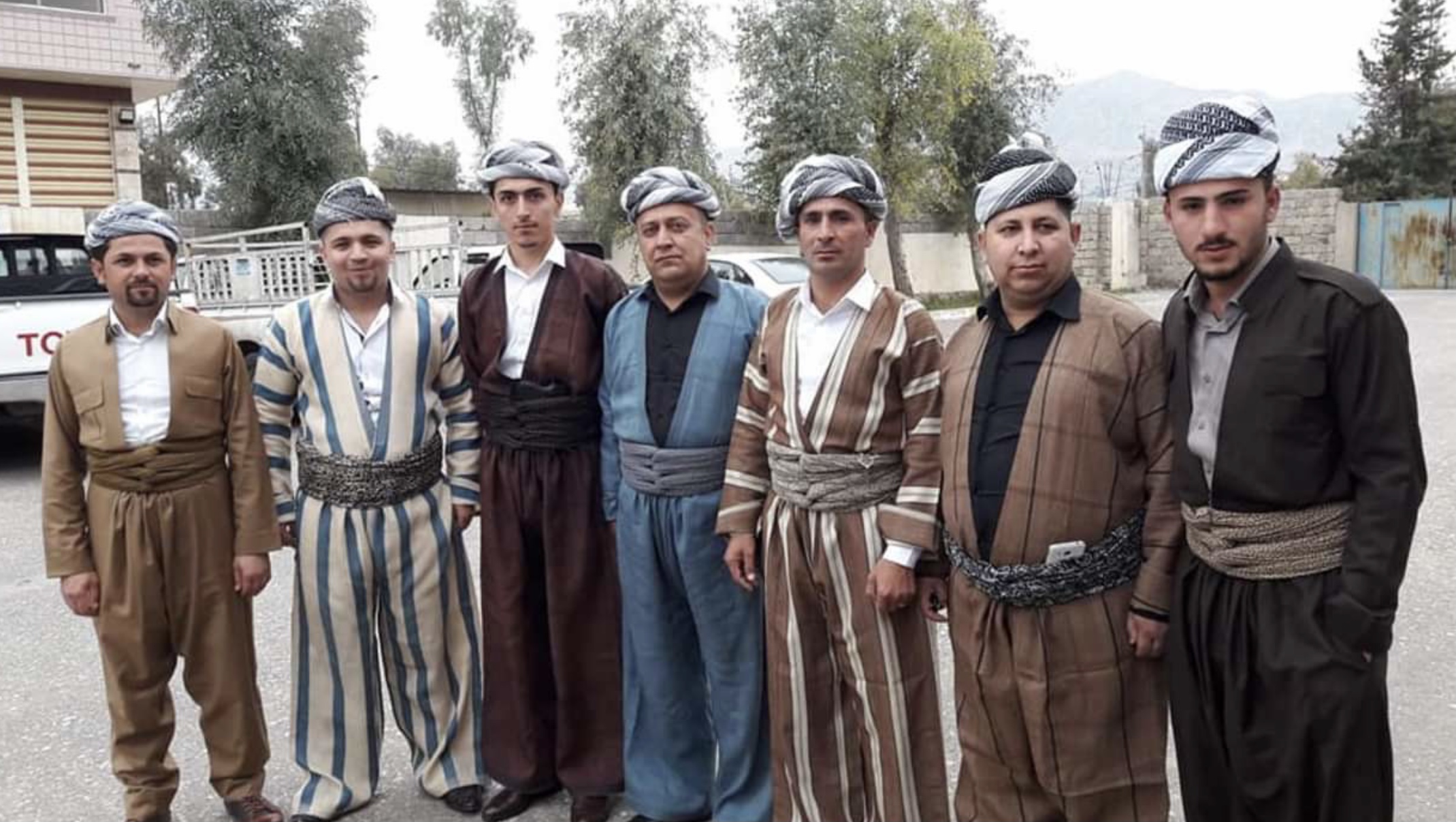
Traditional Kurdish clothing is a living form of cultural heritage, shaped by geography, craftsmanship, family traditions and historical change. From flowing women’s dresses to men’s wide trousers, jackets and woven sashes, regional dress expresses both shared cultural connections and striking local differences. There is no single costume worn identically by all Kurdish people.
This guide explores traditional garments in Kurdish communities across Türkiye, Iraq, Iran and Syria, with particular attention to regional terminology, historical documentation, fabrics, jewelry, footwear, weddings, Newroz and the preservation of textile traditions.
1. Historical development of Kurdish clothing
The mountainous environments connecting eastern Anatolia, northern Mesopotamia and the Iranian plateau shaped practical clothing needs. Wool and felt were useful in cold conditions, while cotton and lighter textiles suited warmer seasons. Trade brought fabrics, dyes and tailoring techniques from neighboring regions. Garments evolved over time, and modern festival clothing often combines inherited designs with newly manufactured textiles.
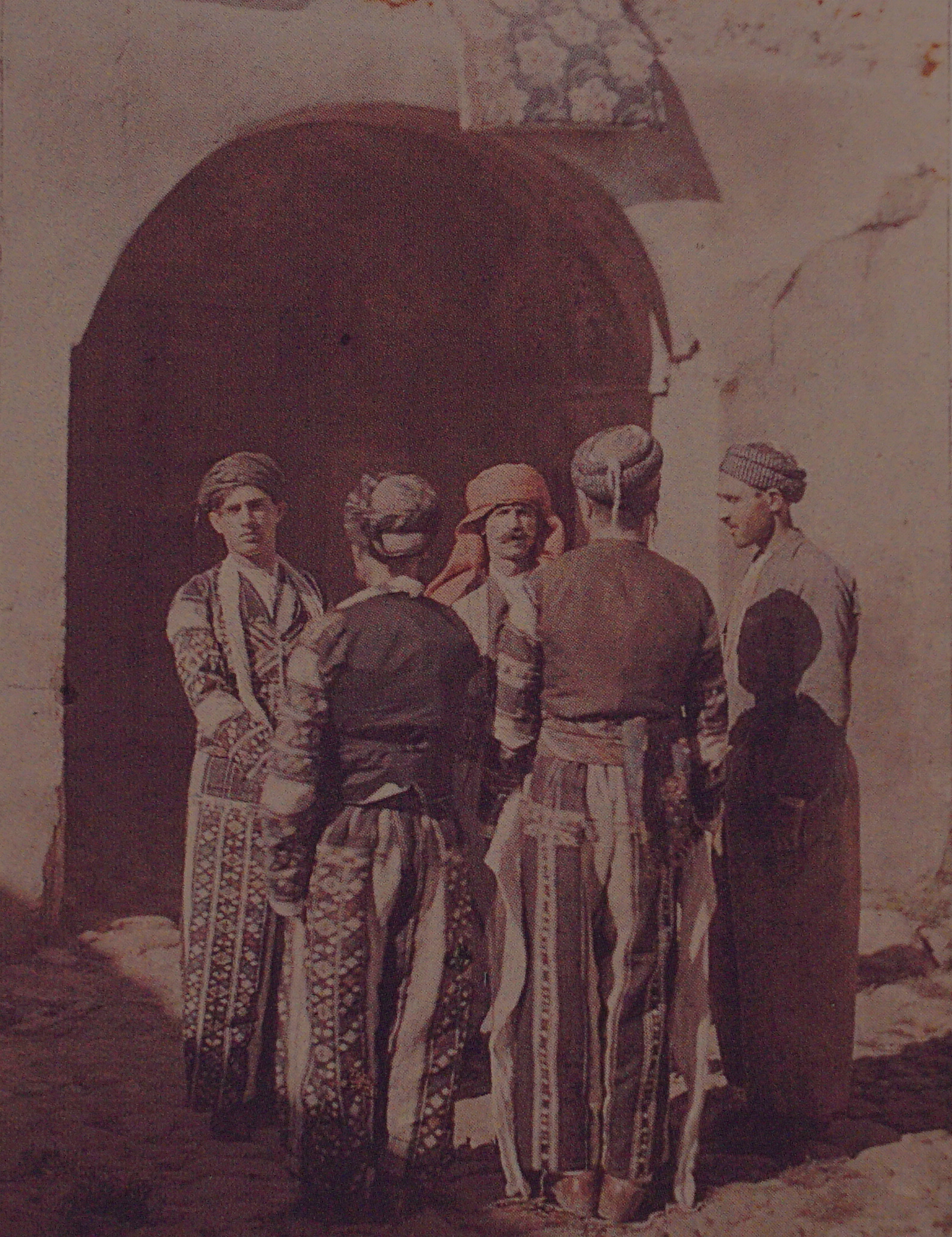
Historical ethnographic documentation from Iranian Kurdish regions records significant differences among Mahabad, Sanandaj, Kermanshah and Kurdish communities in Khorasan. These examples show why it is inaccurate to assign one standardized outfit to all Kurdish people. Likewise, visual similarities with ancient clothing do not prove a continuous, unchanged garment tradition.
2. Traditional Kurdish women’s clothing
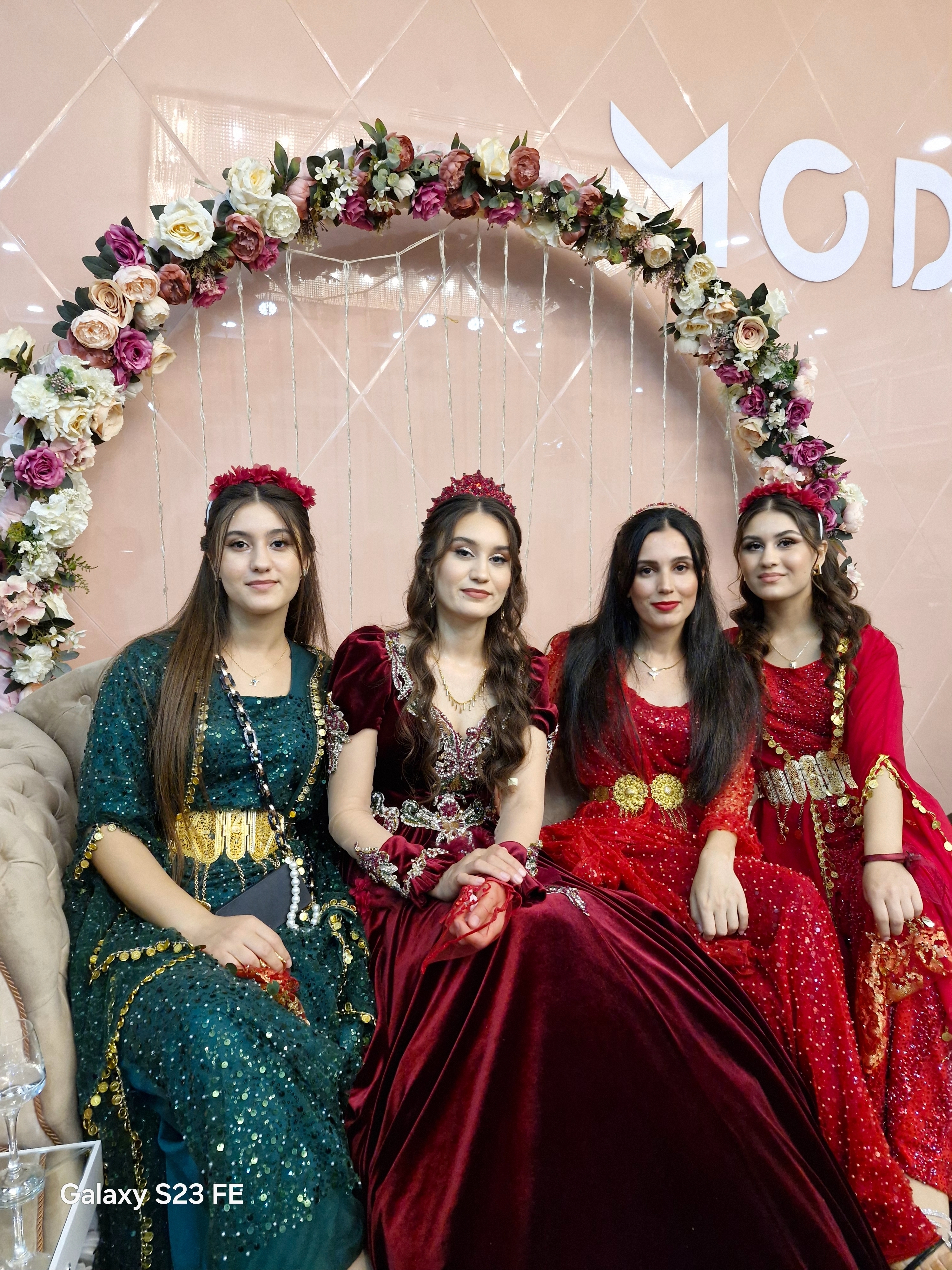
Many women’s formal ensembles combine a long dress with trousers or an underlayer, a jacket or vest, a belt and a head covering. Their cut, decoration and terminology differ by locality and generation.
| Garment | Names or variants | Typical role |
|---|---|---|
| Long dress | Kras, kiras, kerās | Main dress, often ankle-length or floor-length |
| Underdress | Zher-kras and local equivalents | Layer beneath the main dress |
| Loose trousers | Derpê, darpe and variants | Trousers worn beneath a dress |
| Jacket or vest | Helik, helak, kawa and local terms | Structured or decorative upper layer |
| Outer garment | Kawa, qaba, saya | Coat or robe in certain traditions |
| Belt or sash | Peştên, peştand and variants | Textile sash or decorative belt |
| Head covering | Destmal, scarf, decorated cap | Headwear varying by locality and occasion |
| Sleeve extensions | Sorānî, faqyana | Long pointed fabric extensions in certain styles |
Names are transliterated differently across Kurmanji, Sorani and other varieties; some words have different meanings in different places. They should be checked against the terminology used by a particular community.
Long dresses and layered fabrics
Formal dresses may use silk, velvet, brocade, chiffon, cotton or modern synthetic fabrics. Some are fitted at the waist with flowing skirts; others have looser silhouettes. Embroidery, sequins, metallic thread and patterned textiles are especially visible in contemporary celebration wear.
Sleeve extensions
Certain dresses feature long triangular sleeve extensions called sorānî or faqyana in some sources. They may hang freely or be arranged around the arms. Their use is documented in particular Iranian and Iraqi Kurdish traditions, not every Kurdish outfit.
Jackets, belts and jewelry
Short velvet or brocade jackets, long coats, decorated waist belts and necklaces, bracelets, earrings or ornamental headpieces may complete formal outfits. Jewelry has sometimes expressed household wealth or served as portable property, but customs differ across communities.
3. Traditional Kurdish men’s clothing
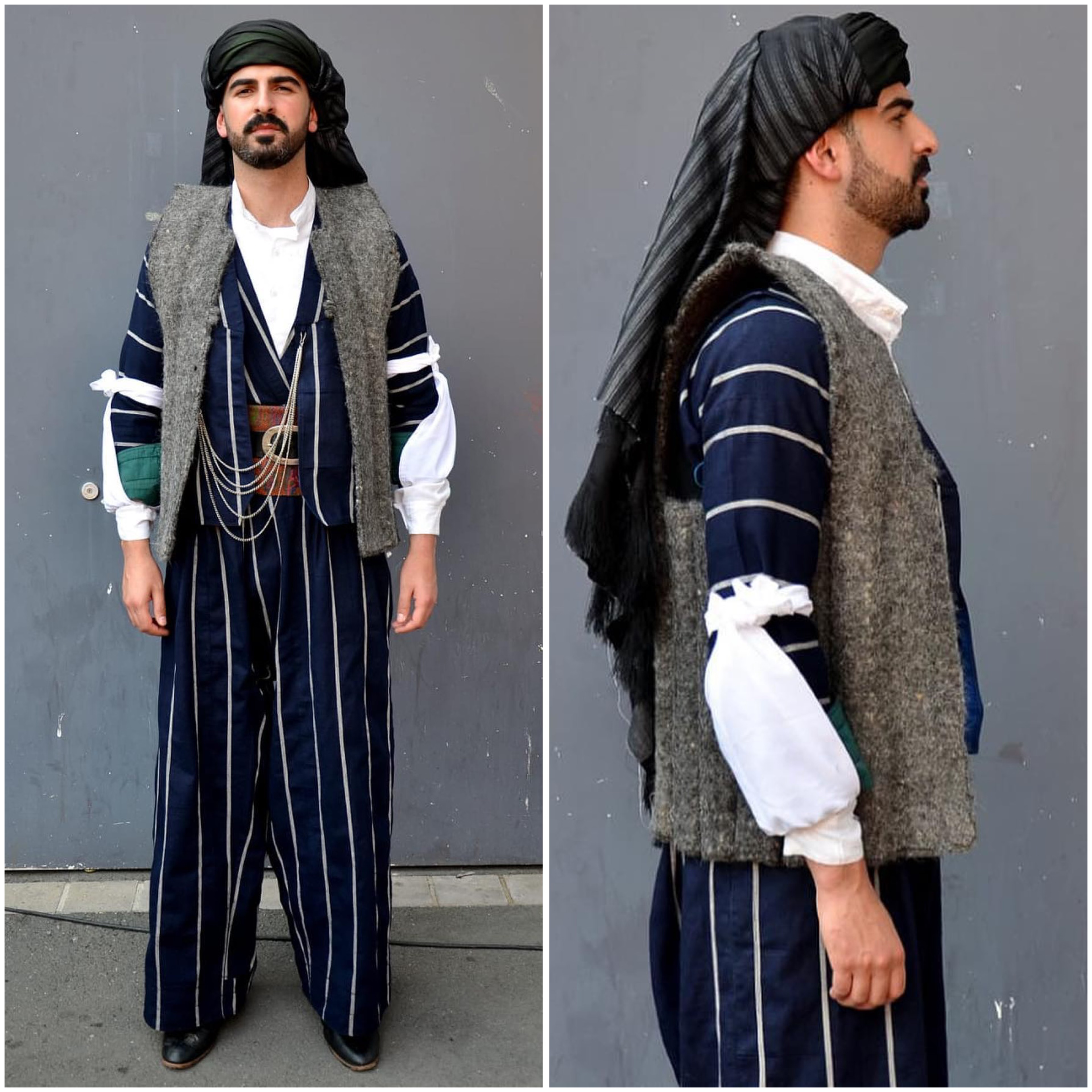
Men’s traditional outfits commonly include wide trousers, a shirt, a jacket or vest, and a long sash wrapped around the waist. Rank û çoxa and şal û şapik are among the names associated with particular ensembles, although garment names and designs vary by region.
| Garment | Description |
|---|---|
| Şal / şalwar | Loose trousers, with regional differences in width and ankle shape |
| Çoxa / chogha | Upper jacket or tailored outer garment |
| Kras / kiras | Shirt or underlayer |
| Peştên / peştand | Long woven sash wrapped around the waist |
| Kelaw | Cap used in some headwear arrangements |
| Jamana and other head cloths | Wrapped head coverings, varying by community |
| Klash / kalash | Traditional textile footwear associated especially with certain mountain areas |
Wide trousers and the sash
Loose trousers can allow freedom of movement when walking, sitting or working outdoors. Their form is also a matter of aesthetic tradition and local tailoring. Sashes secure the outfit and create a recognizable silhouette; wrapping methods differ.
Headwear
Caps, scarves and turbans vary in color, size, fabric and wrapping style. Some have local, religious or social associations, but no single meaning applies across Kurdish society.
4. Regional clothing across Kurdish communities
Bakur: Kurdish regions of Türkiye
Diyarbakır/Amed, Mardin, Van/Wan, Hakkari and nearby communities have varied dress traditions. Long dresses, embroidered fabrics, patterned headscarves, layered men’s clothing and broad sashes appear in different local styles. Highland environments also influenced the use of heavier winter textiles. Mardin’s traditions should not be conflated with those of Hakkari or Van.
Başûr: Kurdish regions of Iraq
Erbil/Hewlêr, Sulaymaniyah/Silêmanî, Duhok, Akre, Zakho and Halabja have rich formal clothing traditions. Women’s flowing dresses, jackets, decorative belts and jewelry are widely visible at weddings and Newroz. Men’s matching trousers and jackets with sashes are also prominent. Distinctive designs can differ between neighboring towns.
Rojhilat: Kurdish regions of Iran
Ethnographic accounts distinguish Mahabad, Sanandaj/Sine, Kermanshah and Kurdish communities in Khorasan. Differences include trouser width, the length and shape of dresses, sleeve extensions, outer garments and caps. These regional distinctions are especially well documented in Encyclopaedia Iranica.
Rojava: Kurdish regions of Syria
Afrin, Kobani/Kobanê, Qamishli/Qamişlo and neighboring communities preserve varied traditions involving colorful dresses, layered garments, scarves and accessories. These developed in a wider Syrian environment with longstanding exchanges among neighboring communities. Specific influences should be attributed only when supported by local historical evidence.
5. Important local clothing traditions
Hawraman / Uramanat
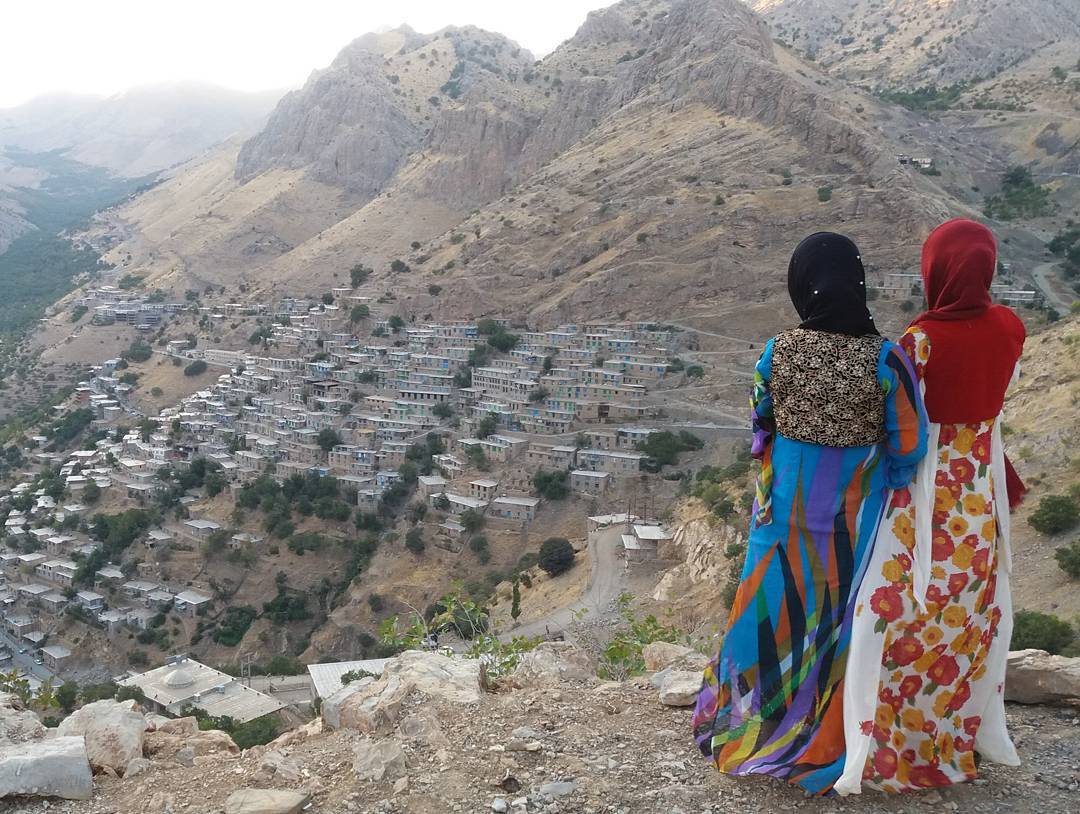
Hawraman, in the Zagros region of Iran and Iraq, is associated with terraced mountain settlements, handicrafts, seasonal pastoral practices and distinctive forms of local dress. UNESCO’s World Heritage documentation highlights the cultural landscape and the continuing relationship between communities and their environment.
Mahabad
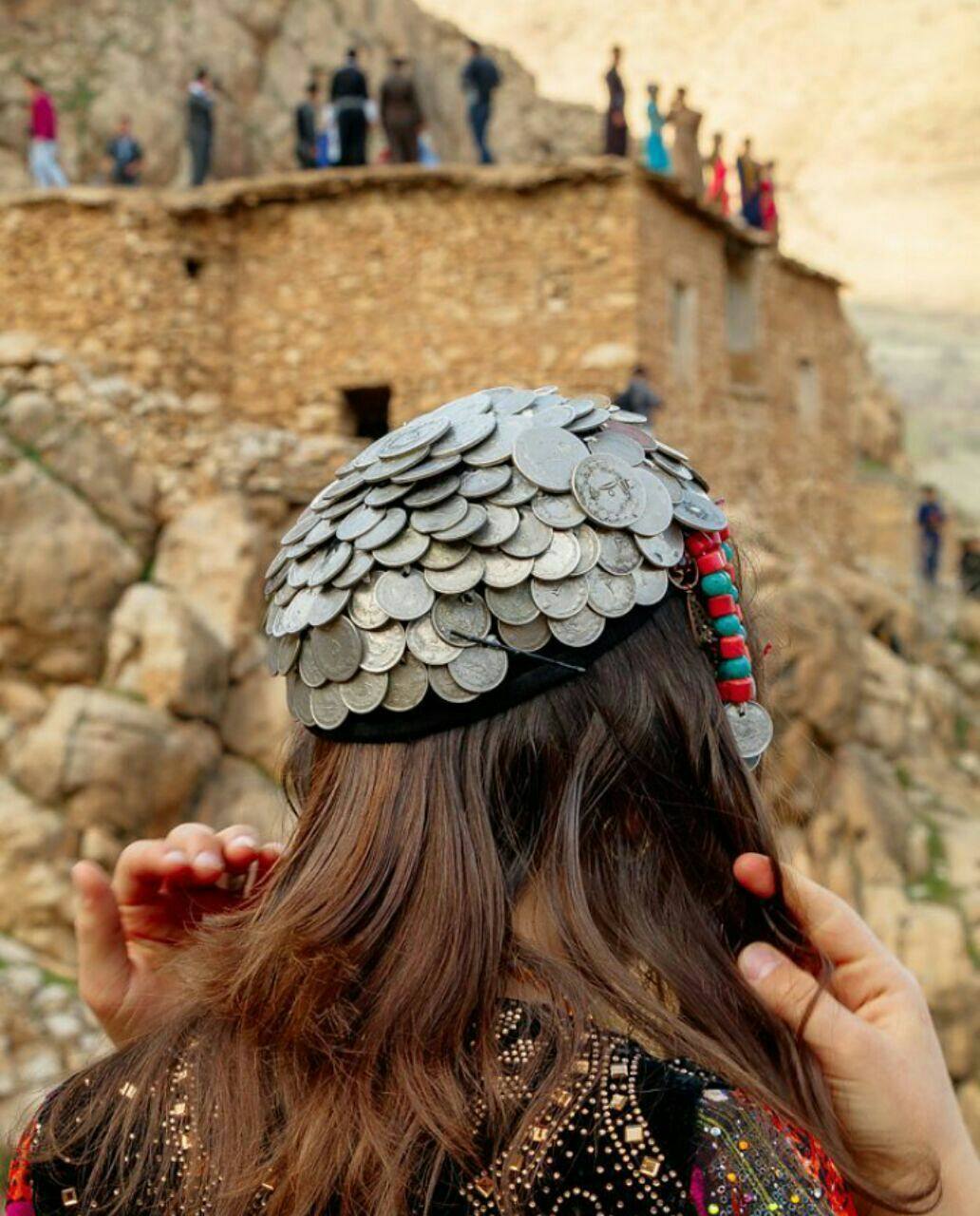
Historical accounts describe long dresses, broad trousers, short jackets, sashes and decorative headwear in local women’s ensembles. The shape of the trousers and dress construction distinguish some Mahabad traditions from styles farther south.
Sanandaj / Sine
Ethnographic descriptions include bell-shaped dresses, sleeve extensions, jackets, outer layers and decorated caps. Such garments show the importance of documenting clothing by place and historical period.
Kermanshah
Regional clothing includes differing forms of outer robes, bodices or vests, shirts, broad trousers and sashes. Clothing practices are not uniform across the province or neighboring communities.
Khorasan Kurdish communities
Historical clothing from northeastern Iranian Kurdish communities includes shorter women’s dresses, additional skirts, stockings and distinctive men’s garments. These examples demonstrate the breadth of Kurdish dress beyond the better-known western Iranian mountain regions.
6. Klash: traditional Kurdish footwear
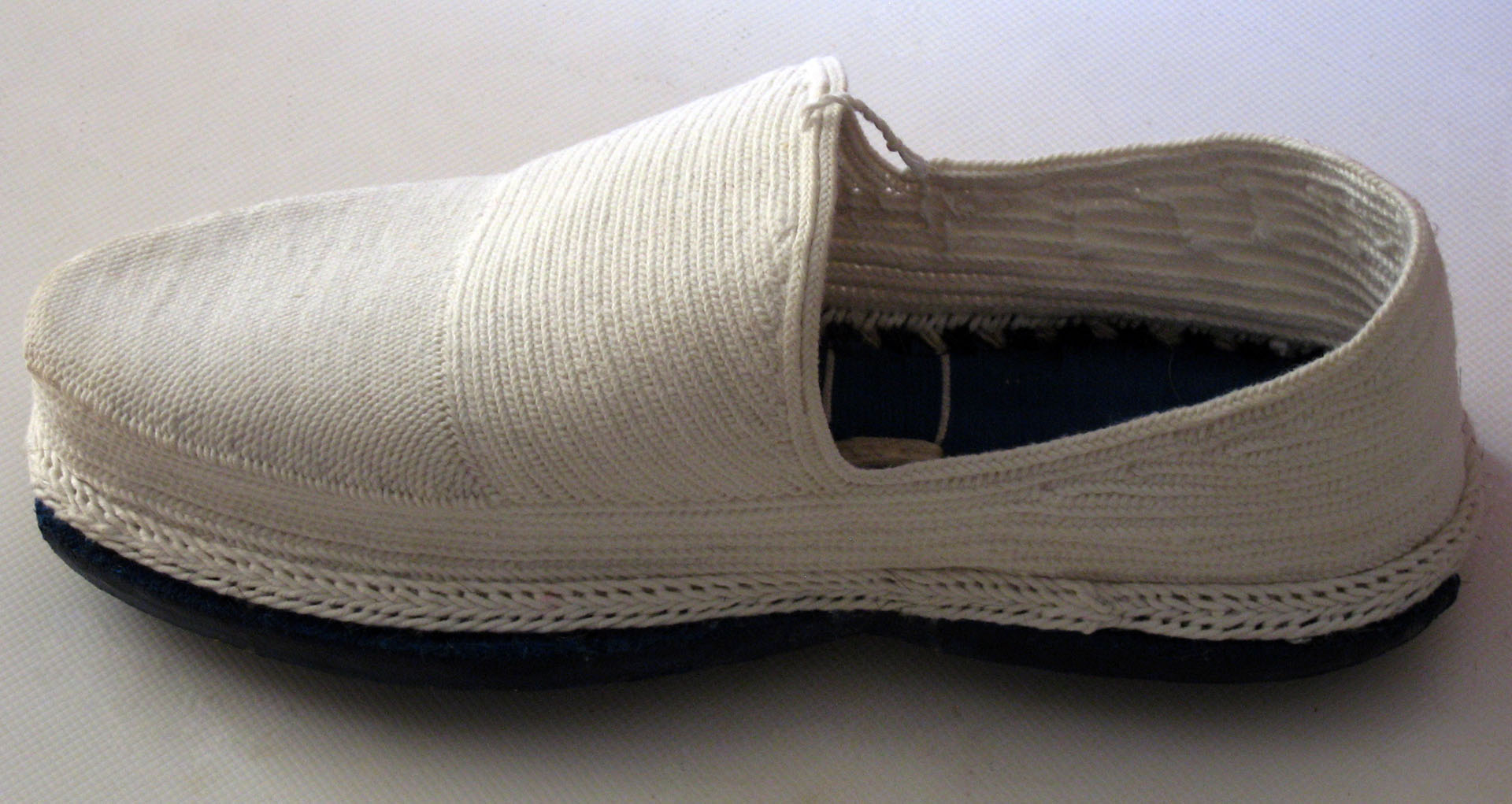
Klash or kelash is a type of handmade textile footwear associated especially with Hawraman and surrounding areas. Traditional production relies on specialized weaving and assembly skills; materials and techniques vary between workshops. Supporting craftspeople and apprenticeships is important for preserving this heritage.
7. Fabrics, colors and decoration
| Material | Common uses |
|---|---|
| Wool | Coats, trousers, winter garments and accessories |
| Cotton | Shirts, scarves and lightweight garments |
| Silk | Formal dresses and scarves |
| Velvet | Jackets, vests and ceremonial clothing |
| Brocade | Patterned outer garments and dresses |
| Chiffon | Flowing layers and sleeves |
| Metallic thread | Embroidery and embellishment |
| Modern synthetics | Contemporary and more affordable formal clothing |
Bright reds, greens, yellows, blues, pinks and gold tones appear in many contemporary formal outfits; earth tones and darker fabrics are also common. Colors do not carry one fixed meaning across every Kurdish region. Interpretations should be documented locally.
8. Clothing at Kurdish weddings
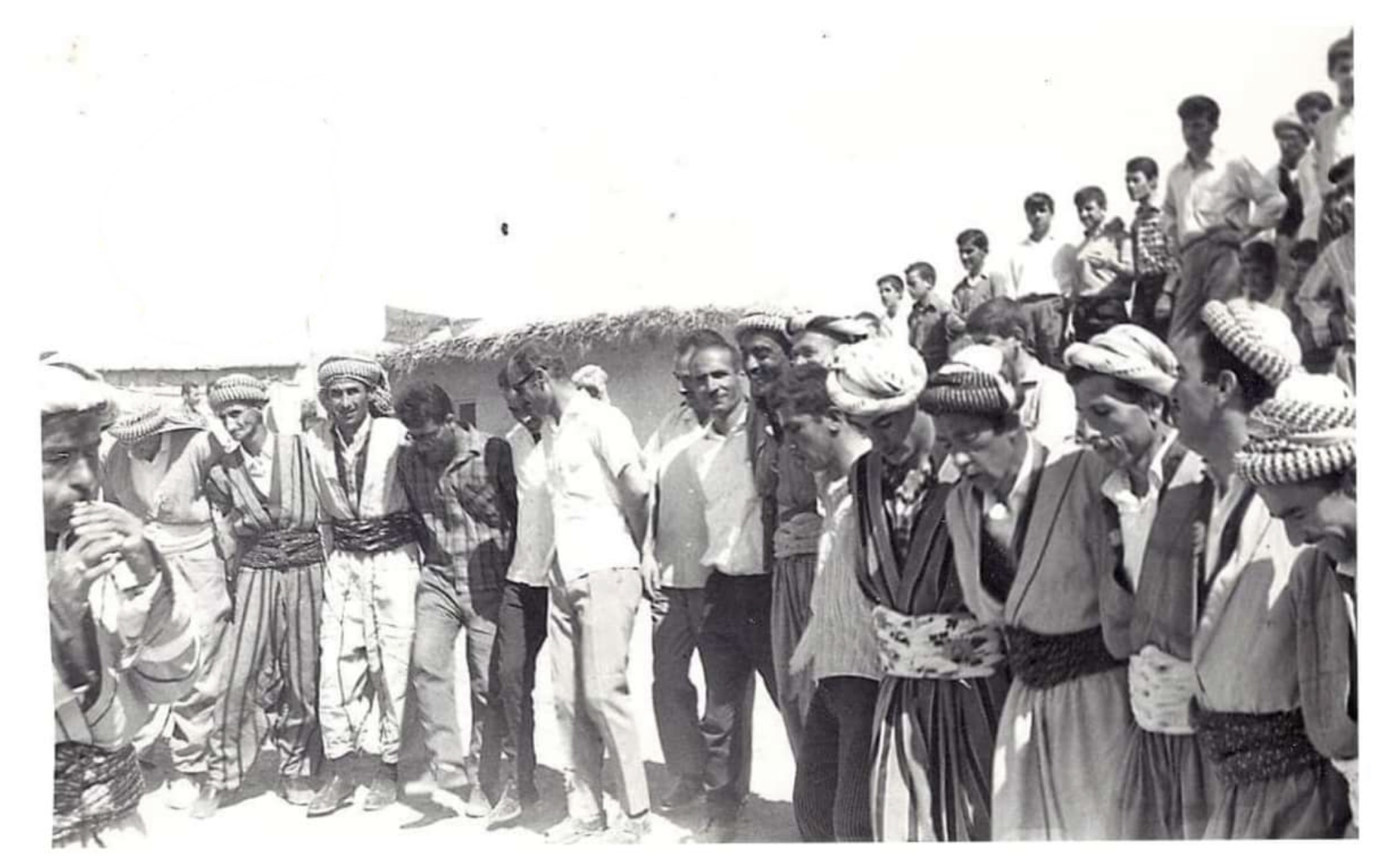
Weddings are important occasions for traditional clothing. Depending on family and local custom, women may wear embellished dresses, belts and jewelry, while men wear traditional trousers, jackets and sashes. Some celebrations combine multiple outfits, and collective dances such as govend and halparke give garments a dynamic visual role.
9. Kurdish clothing during Newroz
Newroz celebrations around the spring equinox provide a prominent setting for traditional dress. Families and communities may choose regional outfits for music, dancing and gatherings. Clothing can express cultural belonging, family memory and personal preference, while the form and meaning of celebrations vary across countries.
10. Religious and community diversity
Kurdish communities include Sunni and Shi’a Muslims, Yazidis, Yarsanis and others. Religious practices can influence ceremonial clothing, head coverings and modesty conventions. Historical research also documents distinctive clothing traditions among Kurdish Jewish communities. Religious dress and general regional dress should not be assumed to be interchangeable.
11. Modern Kurdish fashion
Contemporary designers and tailors reinterpret inherited garment forms using new fabrics, cuts and decoration. Some seek historical reconstruction; others create modern formalwear that retains long dresses, pointed sleeve extensions, wide trousers, embroidery or sashes. Traditions evolve, but descriptions should distinguish historical garments from contemporary adaptations.
12. Preserving Kurdish clothing traditions
- Record garment names in the language variety used by the community.
- Document the date, town, maker and occasion associated with historical photographs.
- Interview tailors, weavers, embroiderers, shoemakers and older community members.
- Support traditional workshops and apprenticeships.
- Preserve textiles and oral histories with community permission.
- Identify whether a garment is everyday, ceremonial, religious, historical or a modern adaptation.
Frequently asked questions
What is traditional Kurdish clothing called?
There is no single name for every outfit. Terms such as rank û çoxa, şal û şapik and kras describe different garments or ensembles, depending on region and language.
Do Kurdish people wear traditional clothing every day?
Some do, but many wear it mainly at weddings, Newroz, cultural festivals and other special occasions.
Is Kurdish clothing identical in Türkiye, Iraq, Iran and Syria?
No. Shared elements coexist with important local differences in fabric, cut, headwear and accessories.
What is klash?
A form of handmade textile footwear particularly associated with Hawraman and neighboring communities.
Can contemporary designs still be traditional?
Traditions can evolve, but contemporary adaptations should be identified accurately rather than presented as unchanged historical garments.
Conclusion
Traditional Kurdish clothing is a diverse and living heritage. Its dresses, jackets, wide trousers, sashes, jewelry and footwear reflect the environments and social histories of different communities. Preserving it requires attention to local differences and to the artisans who maintain its techniques.
Sources and further reading
- Encyclopaedia Iranica — Clothing XVI: Kurdish Clothing in Persia. Regional historical and ethnographic accounts.
- Textile Research Centre, Leiden — The Kurds. Textile and garment overview.
- Encyclopaedia Iranica — Clothing XVII: Clothing of the Kurdish Jews. Historical community clothing traditions.
- UNESCO World Heritage Centre — Cultural Landscape of Hawraman/Uramanat. Cultural landscape and heritage practices.
- UNESCO — Hawraman/Uramanat Management Plan. Local handicrafts and preservation.
- Kurdistan Regional Government Representation in Austria — Traditional Kurdish Clothing. Contemporary cultural overview.


Leave a Reply