Kurmanji and Sorani are two of the best-known varieties of Kurdish. They share a close historical and linguistic relationship, but they differ in pronunciation, vocabulary, grammar and writing conventions. For learners, readers and researchers, understanding these differences is a useful first step toward choosing learning materials and reading Kurdish texts.
1. What are Kurmanji and Sorani?
Kurmanji is commonly described as Northern Kurdish, while Sorani is often called Central Kurdish. Both belong to the Iranian branch of the Indo-European language family. They are not simply two accents: each has its own established literary traditions, grammatical patterns and standard written conventions. At the same time, Kurdish speech includes substantial regional variation, and the labels do not capture every variety spoken by Kurdish communities.
The University of Manchester’s Kurdish language resource describes Kurdish as a Northwest Iranian language and emphasizes the continuum and variation found across Kurdish-speaking areas. Read its overview of Kurdish language affiliation and varieties.
2. Where are they spoken?
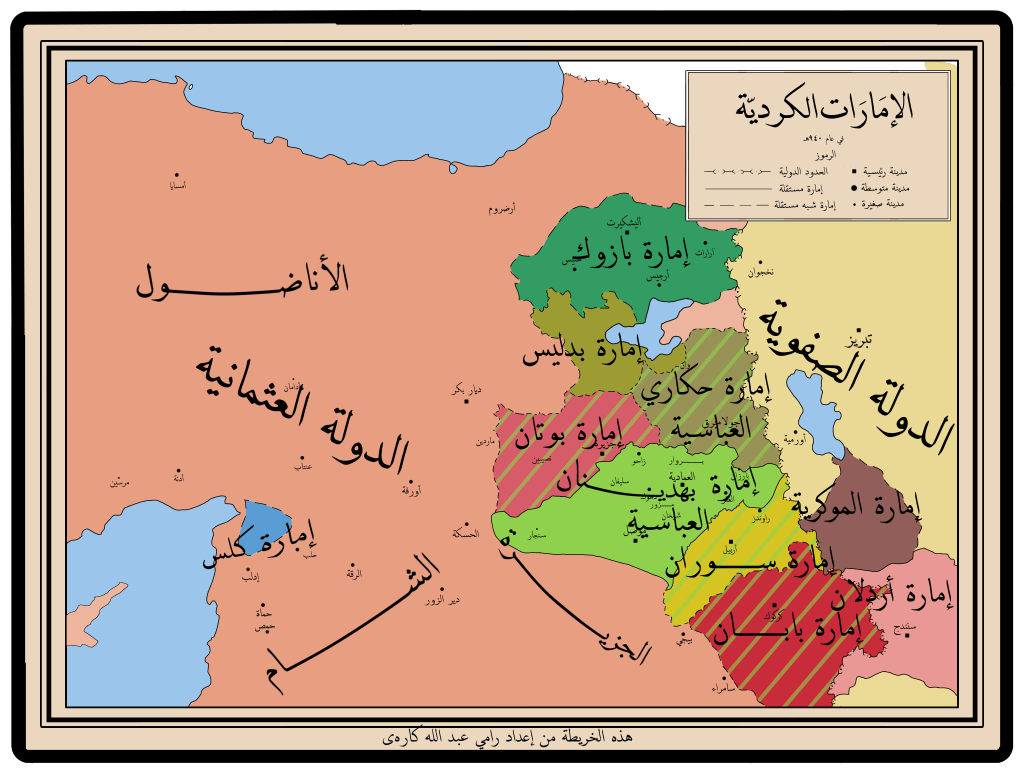
Kurmanji is widely spoken in parts of Turkey, Syria, Iraq and Iran, as well as by diaspora communities. Sorani is particularly associated with the Kurdistan Region of Iraq and Kurdish-speaking areas of western Iran. These are broad patterns rather than strict borders: migration, family histories, education, media and local contact mean that many communities are multilingual, and varieties can overlap geographically.
Maps can help orient a learner, but they should not be treated as evidence that every town or family uses one uniform variety. For a more detailed linguistic discussion, consult the Encyclopaedia Iranica overview of Iranian language documentation.
3. Writing systems: Latin and Arabic-based scripts
One immediately visible difference is the script. Kurmanji is commonly written in a modified Latin alphabet, especially in Turkey and much of the diaspora. Sorani is commonly written in a modified Perso-Arabic script and runs from right to left. These are conventions, not absolute rules: Kurdish has also been written in other scripts, and some communities use alternative conventions.
The scripts do not map perfectly letter for letter. A reader cannot always convert a word from one writing system to the other by replacing characters mechanically, because the varieties also differ in pronunciation and vocabulary. Research on Kurdish language technology identifies dialect diversity, script variation, inconsistent standards and limited digital resources as important challenges. See the peer-reviewed study “Exploiting Script Similarities to Compensate for the Large Amount of Data in Training Tesseract LSTM: Towards Kurdish OCR”.
4. Grammar: similarities and differences
Kurmanji and Sorani share many grammatical features, but their systems are not identical. Linguistic descriptions commonly note differences involving grammatical gender, noun and pronoun case marking, past-tense transitive constructions and certain suffixes. For example, Kurmanji preserves grammatical gender distinctions in ways that Sorani generally does not, while Sorani uses its own patterns of pronominal suffixes and noun marking. The exact forms depend on the construction and regional variety, so learners should use a grammar written for the variety they are studying.
A useful academic starting point is the computational-linguistics paper “A Simple Approach to Unifying Ambiguously Encoded Kurdish”, which summarizes several grammatical and orthographic contrasts. It is a technical paper, so its examples are best supplemented with a pedagogical grammar.
5. Vocabulary and mutual understanding
Kurmanji and Sorani share many words and recognizable roots, but everyday vocabulary can differ. Sound changes, borrowing, local usage and different literary standards all contribute to variation. As a result, a learner who knows one variety may recognize parts of the other but still struggle to follow fast conversation or read unfamiliar texts. Mutual understanding varies with topic, exposure, speaker background and whether the conversation uses familiar or formal vocabulary.
It is more accurate to think of learning Kurmanji as building a foundation that may help with Sorani—not as automatically learning Sorani too. The same principle applies in reverse. Exposure to music, interviews, books and conversation in the other variety can gradually improve comprehension.
6. Which variety should a beginner learn?
- Start with your community: if family, friends or local speakers use one variety, learn that one first.
- Match your goal: choose resources based on the region, media, literature or academic material you want to understand.
- Check the script: confirm whether your course teaches Latin-script Kurmanji or Arabic-based Sorani.
- Use consistent materials: avoid mixing grammar books and dictionaries without checking which variety they describe.
- Learn respectfully: no single variety represents every Kurdish speaker, and language choices can be tied to family and regional identity.
Conclusion
Kurmanji and Sorani are closely related Kurdish varieties with distinct written standards and important grammatical and lexical differences. Choosing one to learn depends mainly on your goals and the people or texts you want to communicate with. Learning about both varieties also helps readers appreciate the linguistic diversity of Kurdish communities.
Further reading and sources
- University of Manchester — Language-genetic affiliation
- Encyclopaedia Iranica — Iranian languages and scripts: Documentation
- Applied Sciences (2021) — Towards Kurdish OCR
- Computational Linguistics in the Balkan and South Slavic Languages — A Simple Approach to Unifying Ambiguously Encoded Kurdish
- UK government publication — Romanization of Kurdish (BGN/PCGN)



Leave a Reply